Mauritius is small: about an hour's drive gets you from the airport to most beach areas. Roads are often slow, though, so trips across the island take longer than the distances suggest. Most visitors use a mix of hotel transfers, taxis and a hire car for a few days. The buses and the Metro Express are cheaper, but slower to reach the beaches.
How long drives take
These are typical driving times with light traffic, worked out from the road network. Allow extra time on weekday mornings and evenings, especially around Port Louis.
- Airport to the coasts: Mahébourg and Blue Bay 5 to 10 minutes; Bel Ombre about 50 minutes; Flic en Flac about 45 minutes; Belle Mare and Trou d'Eau Douce about 50 to 55 minutes; Grand Baie about 55 minutes; Le Morne about 1 hour.
- North to west: Grand Baie to Flic en Flac about 50 minutes; Grand Baie to Le Morne about 1 hour 15 minutes.
- North to Port Louis: Grand Baie to the capital about 20 minutes.
- West coast: Flic en Flac to Chamarel about 40 minutes; Chamarel to Le Morne about 20 minutes.
- West to south-east: Flic en Flac to Mahébourg and Blue Bay about 50 minutes.
- East to west: Belle Mare to Chamarel about 1 hour 20 minutes.
The practical lesson: you can visit any part of the island on a day trip, but driving from one side to the other and back takes a big part of the day. If you want to see both the north and the south-west properly, splitting your stay between two bases saves a lot of driving. Where to stay in Mauritius compares the coasts.
Driving and car hire
Mauritius drives on the left. Twelve car hire firms have desks in the car rental booth on Level 0 of the airport: Hertz, SIXT, Dollar Thrifty, First Car Rental, Europcar, Pingouin, Budget, AVIS, OLA, AKD, Royal and Race Car Rental (see the airport's car hire page). We list eleven of them, with their counters and contact details, under car hire. Ask for child seats when you book. Many hotels can also arrange a car. Where: the airport, Plaine Magnien.
Your licence. The UK government says a UK photocard licence is accepted. The US government says a US licence can be used for up to 4 weeks, and recommends an International Driving Permit for longer stays. For other countries, ask your car hire company which licence it accepts before you travel, and carry your licence whenever you drive.
Rules of the road
- Speed limits are 40 km/h in towns, 80 km/h outside towns and 110 km/h on some motorway sections. There are fixed and mobile speed cameras.
- Seatbelts are compulsory, and babies and toddlers must be in child seats. Ask for these when you book the car.
- Using a phone while driving is illegal.
- The drink-driving limit is very low: 20 mg of alcohol per 100 ml of blood, about a quarter of the limit in England. Penalties include fines of up to Rs 50,000 and prison for a first offence. The simplest rule is not to drink at all if you are driving.
- Drivers must carry a warning triangle and yellow chalk or a marker. After an accident or breakdown, mark the car's position and registration on the road before moving it, if you can. Check that the hire car has them.
What the roads are like. Many roads are narrow and winding, with no pavement and deep ditches at the edge. Expect buses that pull out suddenly, motorbikes on both sides of you, and pedestrians, cyclists and dogs on the road. Driving at night on country roads is harder: lighting is poor and cyclists often have no lights. Plan long drives for daylight.
During a cyclone warning you must stay indoors, and car hire insurance often doesn't apply.
Taxis
Taxis wait at the airport, at hotels and in the main towns. The US government notes that ride-hailing apps are not available in Mauritius, and that taxis often charge tourists more. Agree the price before you get in, and ask your hotel what a fair fare is for your trip. For a late return from dinner, book a taxi in advance. Your hotel or restaurant can call one.
For a day of sightseeing, you can also hire a taxi and driver for the day at an agreed price, which saves you driving and parking.
Buses
Buses run between the main towns from about 5:00 to 21:00, but only until about 18:00 in remote areas. They are cheap and a good way to see everyday life, but routes to the beaches are slower and less frequent than a car. Port Louis, Rose Hill and Curepipe are the main hubs. The National Land Transport Authority publishes route lists and timetables.
The Metro Express
The Metro Express is a light rail line through the built-up centre of the island, with 20 stations between Port Louis and Curepipe, and a line to Réduit. It runs every day, including public holidays, from 6:00 to 19:00, about every 10 minutes. Six of the main stations are next to bus stations.
For visitors, it is most useful for a day in Port Louis or Curepipe without driving and parking. Buy a single-use ticket from the machines at any station. The rechargeable MECard costs Rs 150 for adults, including Rs 100 of credit, and fares on it are 5 to 10% cheaper. Details are on the Metro Express site. The Metro does not reach the coast.
Boats and islands
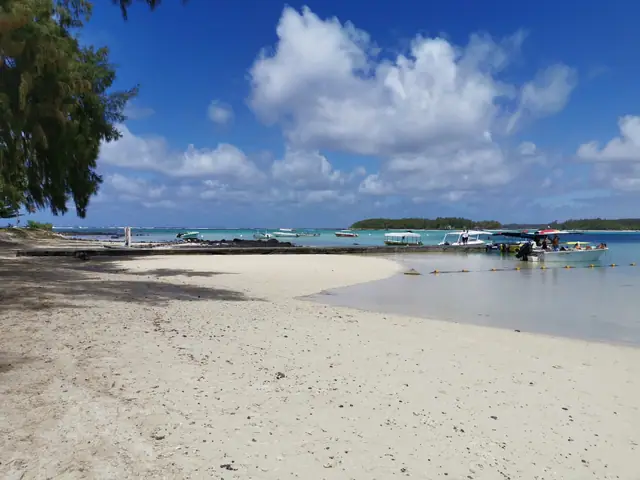
Trips to the islets, such as Île aux Cerfs on the east coast, go by boat from the shore. They are run by licensed operators, or arranged through your hotel. Only licensed skippers may run boats, and tourists can't get a skipper's licence. Before you board, check that there are life jackets for everyone. Boat trips are listed under Things to do. Where: the Île aux Cerfs shuttle runs from Pointe Maurice, near Trou d'Eau Douce.
Getting to Rodrigues
Rodrigues is about 1 hour 30 minutes' flight from Mauritius. Getting to Rodrigues covers the flights, the ferry and getting around on the island.
Related guides
- Getting to Mauritius: entry rules, the travel form and the airport.
- Mauritius travel essentials: money, SIM cards, plugs and staying safe.
- 7 days in Mauritius: an itinerary with drive times.